

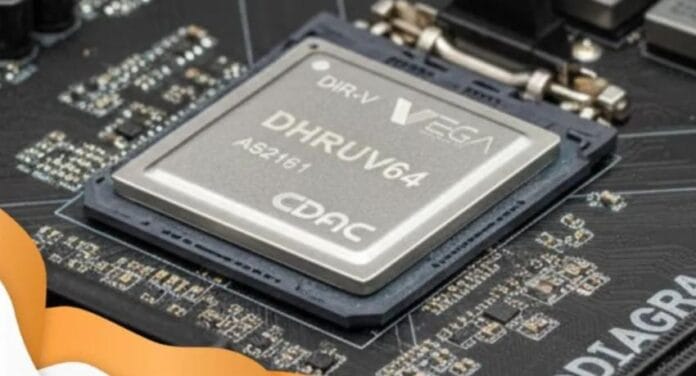

If you follow the Indian technology landscape, you know that December 2025 marked a watershed moment. The buzz wasn’t about a new smartphone or a social media app; it was about something foundational, something that powers everything else: silicon.
The launch of Dhruv64, India’s first fully indigenous 64-bit microprocessor, is more than just a technical achievement. It is a declaration of digital independence.
For decades, India has been a software powerhouse while remaining almost entirely dependent on imported hardware for its critical infrastructure. Dhruv64 is the first major step in changing that dynamic.
In this deep dive, we will cut through the technical jargon to explain what Dhruv64 is, why its unique architecture matters, and exactly where this homegrown “workhorse” chip will be used.
What Exactly is Dhruv64? (The Nuts and Bolts)
Developed by the Centre for Development of Advanced Computing (C-DAC) under the Ministry of Electronics and IT (MeitY), Dhruv64 is a physical manifestation of the Aatmanirbhar Bharat (self-reliant India) mission in the semiconductor space.
It isn’t designed to compete with the blazing-fast processors in your gaming PC or flagship phone. Instead, it is designed for reliability, security, and specific industrial applications.
The Core Specifications:
- Architecture: RISC-V (This is crucial, more on this below).
- Clock Speed: 1.0 GHz.
- Cores: Dual-core.
- Bit-Width: 64-bit (allowing it to address larger amounts of RAM and handle modern computational tasks efficiently).
The Secret Weapon: RISC-V Architecture
The most important feature of Dhruv64 isn’t its speed; it’s the instruction set architecture it uses: RISC-V.
Most of the world’s chips run on proprietary architectures owned by giants like Intel/AMD (x86) or Arm Holdings (ARM). Using these requires paying expensive royalties and licensing fees.
RISC-V is different. It is open-source. This means:
- No Licensing Fees: India doesn’t have to pay foreign companies to use the basic blueprint of the chip.
- Customizability: C-DAC engineers could tailor the design specifically for India’s needs without restrictions.
- Transparency: Because the architecture is open, it is easier to verify that there are no hidden “backdoors” or foreign surveillance tools embedded deep in the silicon.
Why This is a Massive Deal for India
The significance of Dhruv64 goes far beyond national pride. It addresses critical economic and security challenges.
1. Digital Sovereignty and Security
In an era of cyber warfare, hardware is the new battleground. When you import chips for critical infrastructure—like power grids, defense systems, or telecom towers—you are trusting that the foreign manufacturer hasn’t included a “kill switch” or spyware.
Dhruv64 provides a “trusted compute base.” Since it was designed entirely within India, the government and strategic sectors can be assured of its integrity.
2. Fixing the Trade Imbalance
India is massive consumer of electronics, consuming roughly 20% of global microprocessors, yet it manufactures very few. The semiconductor import bill is astronomical. By creating homegrown alternatives for specific sectors, India can significantly reduce this reliance on foreign silicon.
3. Kickstarting an Ecosystem
A chip is useless without software that runs on it. The creation of Dhruv64 forces the development of a surrounding ecosystem—compilers, operating systems, and development tools standardized on Indian hardware. This builds local expertise that pays dividends for decades.
Real-World Applications: Where Will We See Dhruv64?
It is important to manage expectations. You won’t see “Powered by Dhruv64” stickers on laptops at an electronics store next month.
Dhruv64 is a “workhorse” chip designed for embedded systems and infrastructure where reliability and security outweigh raw speed. Its primary targets include:
- Industrial Automation & Robotics: The brains inside factory machinery.
- Smart Energy Meters: The nationwide push for smart metering requires millions of secure, reliable processors.
- Telecom Infrastructure: Routers, switches, and base station equipment where secure data handling is paramount.
- Internet of Things (IoT): Smart city sensors and connected devices.
- Strategic Electronics: Avionics, low-power defense systems, and space applications where a trusted supply chain is non-negotiable.
The Road Ahead: Dhanush and Beyond
Dhruv64 is a milestone, not the destination. It has proven that India can design a complex 64-bit processor from scratch to final silicon.
C-DAC has already outlined the roadmap for successors, aimed at higher performance computing. The upcoming Dhanush and Dhanush+ series of processors are expected to build on the foundation laid by Dhruv64, offering higher clock speeds and more cores for more demanding applications.
Final Thoughts
The arrival of Dhruv64 in late 2025 was the moment India moved from being a global back-office for software to a player in the hardware big leagues. While it may be a humble start in terms of raw specifications, its strategic value is immeasurable. It is the first brick in the foundation of a truly self-reliant digital India.
Frequently Asked Questions (FAQ) about Dhruv64
Q: Can Dhruv64 run Windows?
A: No. Dhruv64 is built on the RISC-V architecture. Windows is primarily designed for x86 (Intel/AMD) and increasingly ARM architectures. Dhruv64 will likely run specialized versions of Linux or real-time operating systems adapted for RISC-V.
Q: Is Dhruv64 better than Intel or Apple chips?
A: It is not designed to compete with them. Intel and Apple chips are high-performance consumer processors. Dhruv64 is a low-power, secure processor designed for industrial and strategic infrastructure. Comparing them is like comparing a tank to a sports car—they have different purposes.
Q: Who manufactured the physical Dhruv64 chip?
A: While designed entirely in India by C-DAC, the actual fabrication (manufacturing) of the initial batches likely occurred in overseas foundries, as India’s commercial semiconductor fabs are still under construction as of early 2026. The goal is to eventually manufacture future iterations entirely within India.
Q: What does “indigenous” mean in this context?
A: It means the intellectual property (IP), the design, the architecture customization, and the layout of the chip were all created in India by Indian engineers, rather than licensing a pre-made “core” from a foreign company like ARM.